


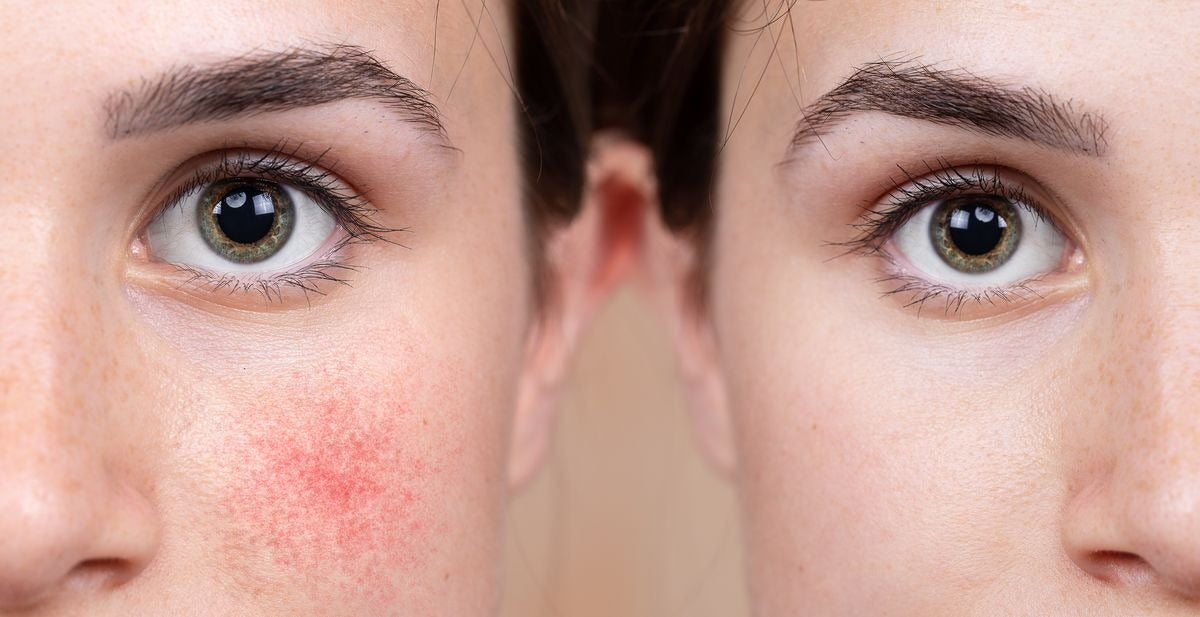
Rosacea: treatment and care for redness-prone skin
Rosacea is not something to be judged by. Even if people with this diagnosis initially find cosmetic home care impossible. Even in remission, using a new product on such reactive and sensitive skin is like walking through a minefield: the vascular reaction is unpredictable - the skin can "burn up", redness, stinging, itching and inflammation appear.
Such a reaction is not a reason to give up, because in addition to dermatological treatment, skin with rosacea needs care and comfort. Just like any other skin, it needs regular cleansing, moisturizing and nourishment. Only the means should be as gentle as possible, their task - to soothe, reduce vascular reactivity, reduce inflammation.
What is rosacea?
Redness (erythema), scaling, dilation of blood vessels - all these are characteristic signs of rosacea exacerbation. In addition, pustules appear on the skin - papules and pustules that have a visual resemblance to blackheads, but without black dots.
The inflammation is primarily localized to the cheeks, cheekbones, forehead, chin and nose. More rarely, redness may occur behind the ears and on the scalp. Rosacea on the body can be localized to the neck, chest.
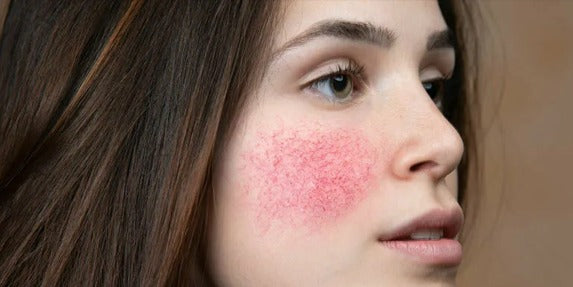
The disease is non-infectious, meaning it is not contagious. Nevertheless, exacerbation of rashes on the face causes significant discomfort. In addition to redness, the inflammatory process can be accompanied by itching.
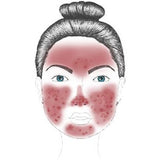
Rosacea redness can occur in different places on the face:
- Cheeks: One of the most common areas for redness in rosacea is the cheeks. Here, the skin can become red and irritated, sometimes with clear red spots or red bumps.
- Nose: Rosacea often affects the nose. Redness in this area can appear as red spots or inflamed areas. Sometimes, dilated blood vessels can also be seen on the nose.
- Forehead: The forehead can also be affected by redness in rosacea. This usually manifests as red patches or extensive redness on the skin.
- Chin: The skin on the chin can also become red and irritated with rosacea. Redness in this area can be due to inflammation or red patches.
These areas of the face are often prone to redness and their condition can vary depending on the severity of the condition and various factors such as stress, nutrition, and environmental exposure.
Rosacea is divided into different stages and subtypes:
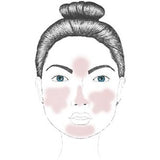
Diatese - Preliminary stage or better prodromal stage
This stage is characterized by sudden episodes of redness (e.g., after eating spicy food) that disappear on their own after a short time. These flare-ups are caused by various reasons. This type of redness is primarily localized in the middle of the forehead, on the nose, chin, and cheeks.
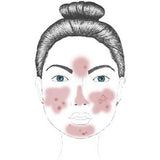 Erythematotelangiectatic rosacea (vascular rosacea) (ETR) - Subtype I
Members of this type suffer from redness, dryness, and scaling, and the skin tends to itch, sting, or burn. Small red blood vessels become visible near the skin surface (telangiectasia).
Papulopustular rosacea (PPR) - Subtype II
This subtype is characterized by the appearance of pimples, in addition to the typical other symptoms - redness, itching, flaking. The inflammations manifest as red bumps, papules, and pustules. They can persist for several weeks. In some cases, rosacea patients develop lymphedema, an accumulation of fluid in the tissues.
Phymatous rosacea - Subtype III
This is the most severe form of rosacea, whose main symptoms - nodular growths (phyma), affecting the sebaceous glands and connective tissue, phimosis-like changes in the nose (rhinophyma), most often occur in men. This condition can cause significant psychological distress.
Why rosacea occurs: causes of disease development
Factors affecting the occurrence of rosacea exacerbations:
- Abuse of spicy food, spices
- consumption of hot drinks (60˚ and above)
- chemical peels
- use of corticosteroid medications (steroidal rosacea)
- cosmetics with aggressive components
- taking certain medications
- excessive sun exposure, UV radiation
- strong wind
- exposure to high and low temperatures
- alcohol abuse
Best skincare and treatment for rosacea skin
How to care for rosacea-prone skin? It is best to use mild and, above all, oil and fragrance-free formulations for sensitive skin, which strengthen capillaries and relieve redness.
Facial cleansing
With rosacea, the skin produces sweat and sebum, and its pollution level during the day is no worse than for healthy skin. We use the gentlest cleansers for rosacea.
Yellow Rose Astringent Lotion, 200 ml
The lotion's regulating properties help reduce sebum production and shrink pores, reducing oily shine and helping to combat the blemishes characteristic of rosacea. The lotion's special soothing ingredients provide a mild and refreshing effect that helps relieve the irritation and redness typical of rosacea. In addition, the lotion has moisturizing and toning properties that help restore the skin's natural moisture balance.
Hydration
For rosacea skin, it is very important to constantly keep the skin's surface layer hydrated, otherwise dryness and irritation cannot be avoided, and exacerbations will become more frequent. After the skin has been gently cleansed, it is important to saturate the face with a moisturizing serum. It is best to use products in the form of solutions. They contain components of the natural moisturizing factor and contribute to rapid saturation of moisture in the skin's surface layer.
Yellow Rose Sensitive Skin Care Face SerumRosacea serum with regular use visibly evens skin tone and eliminates dryness. Its unique composition restores and strengthens the hydrolipidic barrier, reducing irritation, redness and itching. Prebiotic extract is responsible for strengthening skin immunity, protecting it against pathogenic bacteria and drying out.
Thanks to a high concentration of ceramides and prebiotics, this rosacea cream effectively soothes and calms the skin, reduces inflammation and restores the hydrolipid barrier. The product helps to improve skin tone by reducing redness. Collagen in the composition is responsible for increasing elasticity and smoothing wrinkles, making the tissue structure softer. Facial cream for redness is specially created for owners of sensitive and dry skin, which is prone to inflammation.
Recovery
For rosacea, it is important to have light therapy sessions at home to revitalize and repair the skin. Cold cosmetic masks work like cold lotions - allowing you to tame the skin's reactivity. Often, the masks contain anti-stress ingredients, probiotics, vitamins, antioxidants and even lipids.
Yellow Rose Sensitive Skin Care Face Mask
This face mask for rosacea has a special composition with a high concentration of soothing ingredients, prebiotics and ceramides. Thanks to this, the product works instantly: it reduces irritation and inflammation, eliminates burning sensation. The refreshing gel texture helps to pleasantly cool and relax the skin.
Frequently Asked Questions
What causes rosacea?
The main cause of the disease is considered to be a pathology of the blood vessels, namely - a change in their tone.
What works well for rosacea?
Laser for the treatment of rosacea in combination with caring cosmetics for sensitive skin gives the best results of effectiveness.
Where can rosacea occur?
The disease most often occurs in the T-zone of the face, but it can also affect the scalp, neck and chest.

Written by Victoria Grepo

Leave a comment
This site is protected by hCaptcha and the hCaptcha Privacy Policy and Terms of Service apply.