


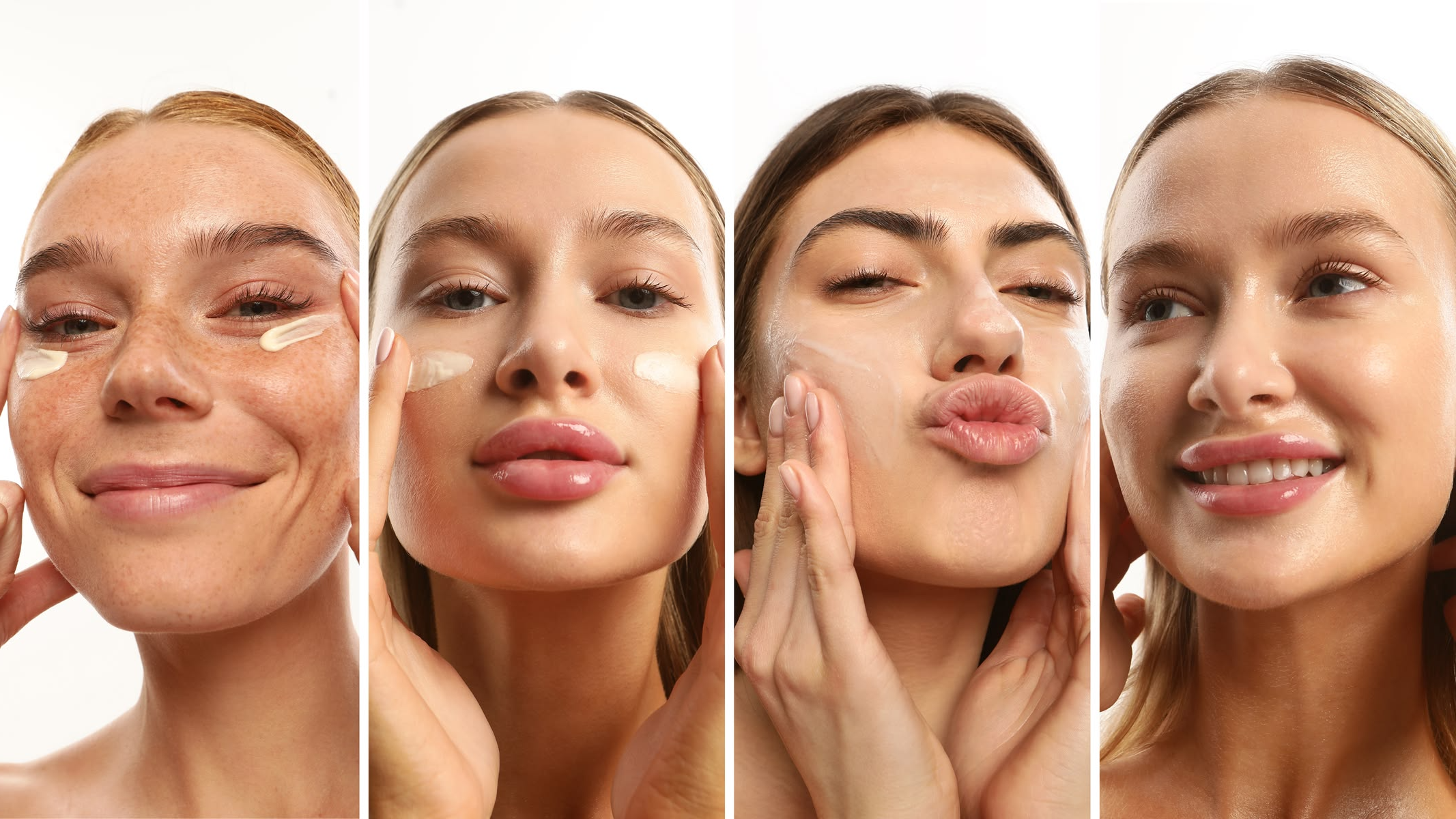
Skincare Routine Step-by-Step – The Right Order Morning and Evening
A good skincare routine doesn't have to be complicated. The most important thing is to use the right products in the right order and that the routine suits your skin type and needs.
If you've ever wondered whether serum should be applied before or after face cream, if toner is really necessary, or if the same routine works both morning and evening, you're not alone. Here, we'll go through a simple and clear skincare routine step by step – so you know exactly what to do.
Why is the order in a skincare routine important?
The order matters because different products have different functions and consistencies. A light product, like toner or serum, should typically be applied before a richer product like face cream. This way, the skin can absorb the active ingredients better, and you'll get more out of your routine.
A good rule of thumb is:
cleansing → light hydration/active treatment → cream → sun protection
A simple 3-step skincare routine

If you want to keep it simple, three basic steps are often enough:
Morning
- Cleansing
- Moisturising cream or serum
- SPF sun protection
Evening
- Cleansing
- Serum or treatment product
- Face cream
This is a good basic routine for beginners or those who want a sustainable routine that is easy to follow every day.
Complete skincare routine – the correct order step by step
Morning skincare routine
Cleansing
Start the day with a mild cleanser to remove sweat, sebum, and residue from the night.
Toner or face mist
A toner is not always a must, but it can provide extra hydration, calm, and balance to the skin.
Serum
Serum is the step where you can target a specific skin need.
Eye cream
Eye cream is optional but can be a good complement.
Face cream
Face cream helps to lock in moisture and strengthen the skin barrier.
SPF sun protection
SPF is the most important step in the morning routine.
Evening skincare routine
Cleansing
In the evening, cleansing is especially important.
Toner
After evening cleansing, toner can help the skin regain comfort and moisture.
Serum or active treatment
Evening is often the best time for more active products.
Eye cream
If you use eye cream, you can apply it in the evening as well.
Face cream or night cream
Finish your evening routine with a cream that helps the skin recover during the night.
Which steps are most important?
Must-haves
Cleansing
Cleansing removes dirt, sebum, makeup, and sunscreen residue from the skin. If the skin is not properly cleansed, pores can become clogged, and subsequent products will be absorbed less effectively.
Face cream or moisturising product
Face cream helps the skin retain moisture and strengthens the skin barrier. Without moisturisation, the skin can become dry, sensitive, or feel tight.
SPF in the morning
Sun protection protects the skin from UV radiation that causes hyperpigmentation and premature aging. Without SPF, the skin can develop wrinkles and an uneven skin tone more quickly.
Good to have
Toner
Toner helps to hydrate and balance the skin after cleansing. It can also improve the absorption of serum and cream.
Serum
Serums contain concentrated active ingredients that target specific skin concerns such as dryness, uneven skin tone, or fine lines.
Eye cream
Eye cream moisturises the thin skin around the eyes and can help the skin feel softer and more comfortable.
Extra when needed
Exfoliation
Exfoliation removes dead skin cells and can give the skin more radiance and a smoother texture. Typically used 1–3 times a week.
Face mask
Face masks provide the skin with extra care, such as more moisture or a calming effect, and are often used as a supplement to the daily routine.
Spot treatment for blemishes
Spot treatment is applied directly to a pimple or imperfection and can help calm the skin and reduce the visibility of blemishes.
Richer night mask or barrier cream
A richer night product can be used when the skin feels extra dry or sensitive and helps the skin recover during the night.
How often should you exfoliate your skin?

Exfoliation is not something you have to do every day. For most people, 1–3 times a week is sufficient, depending on skin type and the product you use.
- Sensitive skin: 1 time a week or less often
- Normal/combination skin: 1–2 times a week
- Oily or congested skin: 2–3 times a week if well tolerated
Adapt your skincare routine to your skin type
Skincare routine for dry skin
Focus on gentle cleansing, hydrating toner, serum with hyaluronic acid, and richer face cream.
Skincare routine for sensitive skin
Choose fragrance-free or mild products, soothing serum, and barrier-supporting cream.
Skincare routine for oily or combination skin
Opt for light cleansing, balancing serum, light gel cream, and SPF with a light finish.
Skincare routine for mature skin
Here, it's often good to combine hydration, antioxidants, peptides, retinol or retinal, and daily SPF.
Common mistakes in a skincare routine
Too many products at once
It's easy to think that more products give better results, but the skin often benefits more from a well-thought-out and simple routine.
No SPF during the day
This is one of the most common mistakes.
Too harsh cleansing
If the skin feels tight immediately after washing, the cleanser might be too drying.
Changing products too quickly
Skincare takes time.
Copying someone else's routine directly
Your skin type, season, age, and skin condition all play a role.
Summary
The best skincare routine is not the most complicated – but the one that is right for your skin and that you can follow every day.
Start simple: cleanse your skin, hydrate and nourish, protect your skin with SPF during the day.
Skincare
FAQ – common questions about skincare routines
Skincare routine
No, toner is not a must for everyone.
Serum is used before face cream.
Yes, often.
It depends on the products and the skin's needs.
Yes, for many, cleansing, moisturising, and SPF in the morning is sufficient.

Written by Victoria Grepo


Leave a comment
This site is protected by hCaptcha and the hCaptcha Privacy Policy and Terms of Service apply.